The First 15 Minutes of a Barbershop Inspection
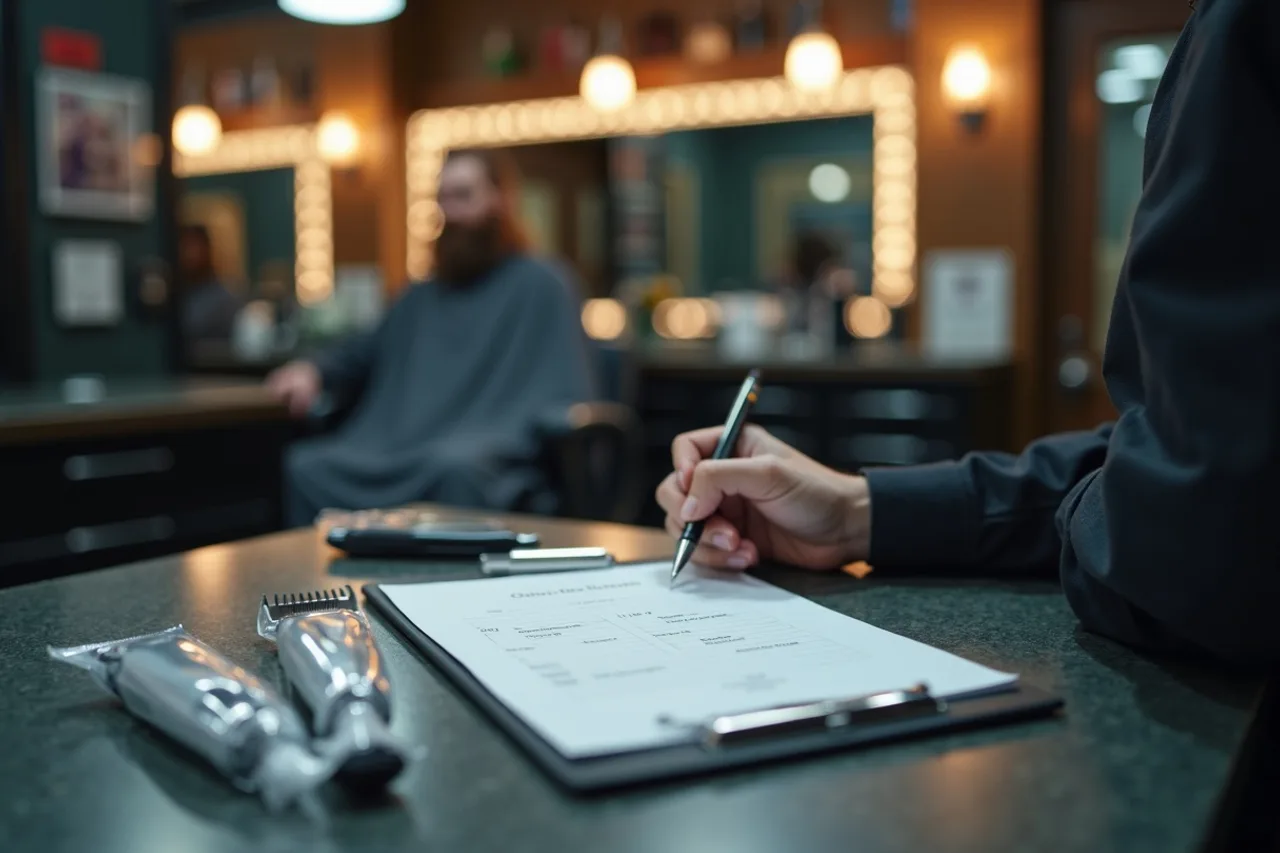
A Sanepid (the Polish sanitary inspectorate) inspector walks into your barbershop at 11:00. By 11:15 they will have formed an opinion of the whole salon —…
A Sanepid (the Polish sanitary inspectorate) inspector walks into your barbershop at 11:00. By 11:15 they will have formed an opinion of the whole salon — sometimes before opening the first binder. The first 15 minutes of an inspection work like a first impression on a date: hard to reverse. If, in that time, the inspector sees order, calm and a system, the rest of the inspection flows smoothly. If they see chaos, a dirty razor on the counter and nervous scrabbling for papers — they start digging deeper. This article breaks those first 15 minutes down minute by minute and shows what happens step by step.
Minute 0–2: entry and introductions
The inspection starts with formalities. The inspector is obliged to show a service ID card and a named authorisation to inspect. This is your moment to calmly:
- ask to see the documents (you have the right to),
- note down the inspector's details and the authorisation number,
- indicate where they can sit and put their things.
Do not panic — panic is visible and raises suspicion. If you happen to be serving a customer with a razor to the face, safely finish that action. The inspector will understand; no one expects you to drop the clippers halfway through a shave.
Minute 2–5: the visual scan of the salon
Before any question about documents, the inspector looks around. In a few minutes they assess the sanitary condition "by eye". What they see:
- Cleanliness of the stations — whether hair from the previous customer is lying under the chair, whether the counters have been wiped.
- Tools — whether clean ones are kept apart from dirty, whether a razor is lying loose next to a comb.
- The hand-hygiene point — soap, single-use towels, hand sanitiser at hand.
- Staff — clean work clothing, well-kept hands, no food or drink at the station.
- Waste — whether used blades go into a closed sharps waste container rather than the hair bin.
A real-life example: the inspector sees clean stations, blades in a labelled container and a barber disinfecting clippers between customers. First thought: "there is a system here". That changes the tone of the whole inspection.
Minute 5–8: the request for documents
After the scan, the inspector sits down and asks for the papers. In a barbershop they usually ask about:
| Document | What the inspector checks |
|---|---|
| Sanitary procedures | Disinfection, sterilisation, hand hygiene, action after a cut |
| Disinfection and sterilisation register | Whether it is kept up to date |
| Product safety data sheets | For every biocidal product |
| Sanitary-epidemiological clearances | Whether they are current for the staff |
| Sharps waste collection contract | Who collects used blades and how |
Reaction time is crucial. A binder produced in 30 seconds says "I have a system". Ten minutes of searching and a call to the accountant say "the documentation lives in a drawer, not in practice". Keep everything in one designated place that the whole team knows.
Minute 8–12: the walk-through of the stations
Now theory meets practice. The inspector gets up and checks, in turn:
- Tool sterilisation — whether the autoclave works and is documented, whether tools cutting near the skin are sterile. More in the article on tool sterilisation and the autoclave.
- Station disinfection — how the razor and counter are disinfected between customers. We describe the procedure in the article on razor and station disinfection.
- Products — whether the concentrations and contact times match the manufacturer's instructions.
- Storage — clean tools in closed containers, chemicals kept apart from customer accessories.
The inspector compares what they see with what is written in the procedure. If the procedure says "we disinfect the razor for 15 minutes in solution" and the staff do it "quickly" — that is a non-compliance.
Minute 12–15: questions for the staff
The last element of the first phase is a conversation with the team. The inspector does not expect procedures recited from memory — they expect a barber to know what to do. Typical questions:
- "How do you disinfect the clippers between customers?"
- "What do you do with the blade after a shave?"
- "What do you do if you cut a customer?"
If every employee answers differently, it is a sign there is no implemented system. Consistent answers from the team are the best shield — which is why procedure training is not a formality but real protection.
Mini-test: will you survive the first 15 minutes
Answer YES or NO:
- Is the sanitary documentation in one place that the whole team knows?
- Is the disinfection register kept today, not "recently"?
- Do used blades go into a closed sharps waste container right now?
- Will every barber answer the question about disinfecting the clippers the same way?
- Are the stations clean between customers, not just in the morning?
More than two NOs? Do not wait for an inspection — sort it out now.
What to do and what not to do in those 15 minutes
Your conduct in the first minutes can tip the scales. A short list worth keeping in mind:
Do:
- stay calm and speak plainly — the inspector is a person doing their job,
- show, do not tell — instead of "we disinfect the tools", show the product, the register and the sharps container,
- answer specifically — "we change blades after every customer, used ones go here",
- take notes — write down what the inspector asks and comments on.
Do not:
- do not tidy nervously in front of them — it signals things are different day to day,
- do not backfill registers retroactively — backdating shows,
- do not hide tools or waste during the inspection,
- do not argue — enter your reservations into the report.
What happens after the first 15 minutes
The opening phase is only the start. After it the inspector usually:
- continues a detailed check of the documentation, comparing the records with reality,
- questions further employees,
- asks for additional documents (contracts, safety data sheets, clearances),
- draws up a report describing compliances and non-compliances.
At the end, four scenarios are possible: an inspection with no remarks, recommendations with a deadline for improvement, a fine, or — in extreme cases of a health threat — suspension of the business. On what to do when a post-inspection decision arrives, we write in the article on the Sanepid post-inspection decision.
Frequently asked questions
Does the inspector really assess the salon in the first minutes?
Yes. The first visual impression — cleanliness of the stations, order with the tools, the staff's conduct — strongly influences the tone of the whole inspection. A salon that looks well-run gets a gentler inspection.
What should I do if I am serving a customer when the inspector enters?
Safely finish the action you have begun, especially if you are holding a razor to the customer's face. Customer safety is the priority, and the inspector understands this. Ask a colleague to help with the introductions.
Do I have to show the documents immediately?
The inspector has the right to ask for the documentation and you should make it available without undue delay. Keeping everything in one binder lets you do this in a matter of seconds.
What if I do not have something?
Say plainly that you have not implemented it yet, and do not try any retroactive backfilling. Honesty is better than being caught with a backdated register, which undermines the credibility of the whole documentation.
Get through the first 15 minutes without stress
Those first minutes are won by whoever has a system that works every day and the papers at hand. The ready-made BarberReady sanitary documentation includes procedures, registers and team instructions — ready to pull out of a single binder. Tailored to the barbershop, prices from PLN 299.