When a Barber Should Refuse Service: Skin Diseases
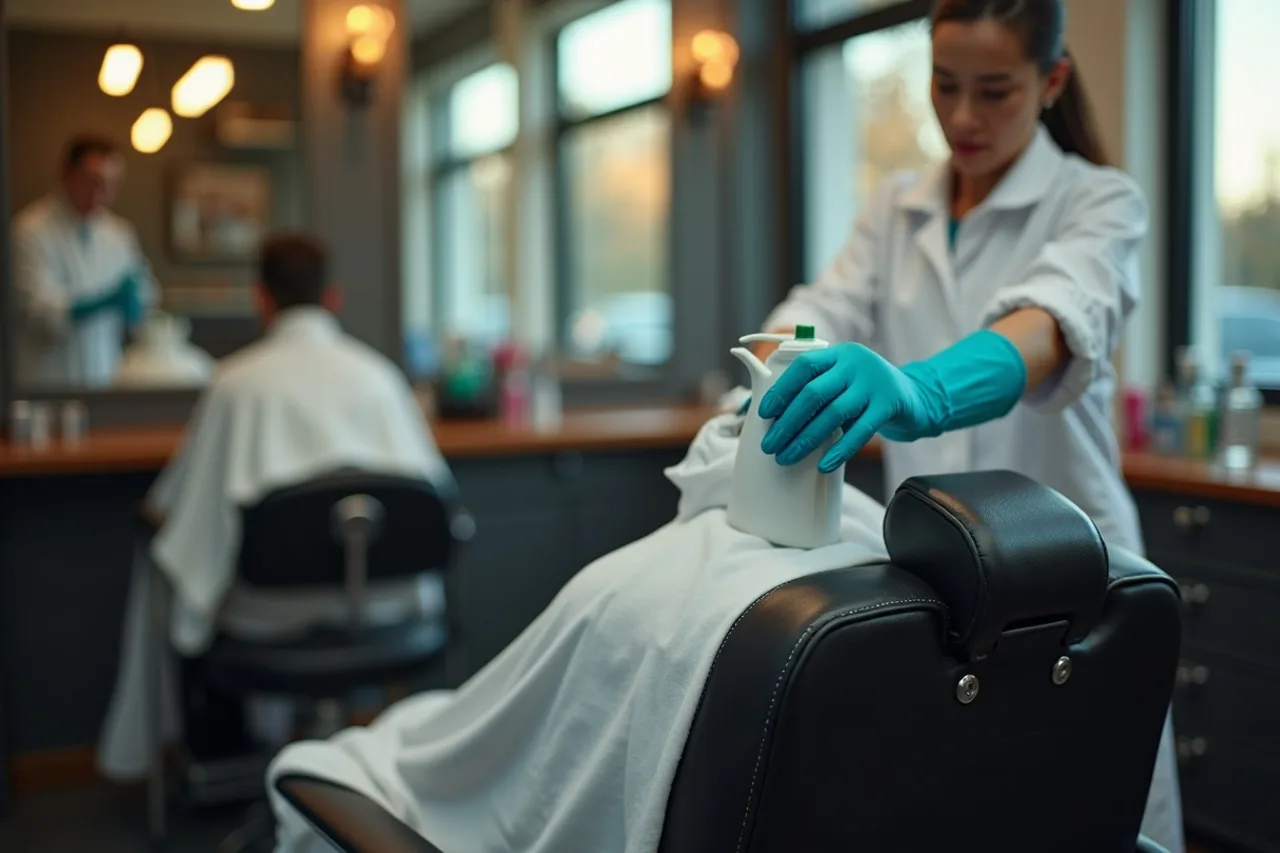
A regular takes the chair. He removes his cap, and you spot a weeping, reddened patch on his scalp with a yellowish crust.
A regular takes the chair. He removes his cap, and you spot a weeping, reddened patch on his scalp with a yellowish crust. The client shrugs it off: "It's nothing, just cut around it." And you're caught in a dilemma: serve him and keep the client, or refuse and risk an awkward conversation. This is one of the hardest moments in a barber's work. This article shows when refusing a service is not only your right but actually your duty – and how to do it professionally, without conflict.
Why a barber can refuse in the first place
A barber works with tools that make contact with the skin – clippers, scissors, a straight razor. Through these tools an infection can be passed from one client to another, or to yourself. The Polish Act of 5 December 2008 on preventing and combating human infections and infectious diseases imposes an obligation to take measures preventing the spread of infections. In practice this means that in the presence of visible, active disease lesions the barber has the right and the reason not to perform the service – for everyone's safety.
This is not a "whim". It is part of your responsibility for hygiene in the salon – the very responsibility an inspector asks about at every inspection.
An important caveat: a barber does not make a diagnosis. It is not your job to determine whether it is ringworm, impetigo or ordinary irritation. Your job is to recognise a visible warning sign and decide whether, given the state of the skin, the service is safe. When in doubt, you refer the client to a doctor – this is professional and safe for both sides.
When to refuse – specific signals
This is not about diagnosing – you are not a doctor. It is about recognising visible signals where it is better to hold off on the service:
- weeping, purulent or crusting lesions on the scalp and face (possible bacterial infection, e.g. impetigo)
- round, flaking patches with thinning hair (possible ringworm of the scalp)
- visible parasites or nits at the hair roots (head lice)
- open, fresh wounds and ulcerations in the working area
- extensive, active lesions of unclear character that may be transmissible
With ringworm or head lice the tools become a carrier – without immediate and effective disinfection you will pass the problem on to the next client.
When the service is possible – with caution
Not every skin change is a reason to refuse. Many conditions are non-contagious and do not rule out a haircut, provided you take care:
| Skin condition | Decision | Note |
|---|---|---|
| Dry skin, ordinary dandruff | service OK | standard tool hygiene |
| Psoriasis (inactive, no wounds) | service OK | non-contagious, caution around lesions |
| Healed scar, birthmark | service OK | avoid when shaving |
| Weeping infection, purulent crusts | refuse | risk of transmission |
| Ringworm, head lice | refuse | refer to a doctor |
| Fresh, open wound | refuse or avoid the area | risk of blood contact |
How to refuse without losing the relationship
A refusal is not an accusation. It is care. The key is the tone and the wording – you talk about safety, not about "dirt". A proven approach:
- State the fact without judgement: "I can see a change on the skin here that looks active."
- Explain the reason: "I don't want to irritate it with the clippers or pass it on to other clients."
- Offer a solution: "Come back once it's healed – let's book a new appointment, and if you're unsure it's worth seeing a doctor."
Most clients will understand this. Those who take offence would have been a risk anyway. Professionalism builds trust – the client sees that you care about him too.
What to do with tools after contact
If contact with a disease lesion or with blood did occur despite everything, the tools require an immediate, reinforced procedure: washing, disinfection, and for equipment that has contacted blood – sterilisation. You must not use the same tools on the next client without a full cycle. How to set this up is covered in our article disinfectants in a barbershop – how to choose and in disinfection and sterilisation register – template.
Staff health works both ways
Refusal applies not only to clients. If it is the barber who has an active lesion on the hands – a wound, an infection, a weeping patch – he too should hold off on working with a client, or cover the lesion and wear gloves. We write about staff hygiene and health checks in our article staff hand hygiene procedure in a barbershop.
A brief chat before the service
The best moment to catch a problem is before the client sits in the chair. This is not an interrogation, just two or three natural questions that protect both sides along the way:
- "Is there anything on your scalp or face I should know about?"
- "No fresh wounds, irritation or allergies?"
- when shaving: "Is your skin not irritated today after your last shave?"
Such a chat gives you a basis for your decision and shows the client that you take hygiene seriously. It is worth noting the important information in the client's card – bearing in mind the data protection rules we discuss in our article GDPR in a barbershop – client consents and CCTV.
Why this pays off, not just protects
Refusing a service seems like a loss – one client fewer, one awkward conversation. But look at the bigger picture. If you had served a client with ringworm and passed it on to three more, you would have lost not one but four – plus the reputation of a salon where "you can catch something". In an industry built on trust and referrals, that is the worst possible scenario.
A professional refusal works the other way round. A client to whom you politely explain the reason and offer an appointment after healing is more likely to return – because he saw that you care. Hygiene is not a cost. It is a sales argument that the competition often does not have.
Frequently asked questions
Does a barber have the right to refuse service to a client with a visible skin disease?
Yes. In the presence of visible, active disease lesions that may be transmitted through tools, a barber has the right to hold off on the service. This stems from responsibility for hygiene and from the duty to prevent the spread of infections under the Act on infectious diseases.
Can I cut a client with psoriasis?
Usually yes – psoriasis is not a contagious disease. If the lesions are inactive and there are no open wounds, the service is possible with care. Refusal applies to active, weeping or contagious conditions such as ringworm or head lice.
How do I refuse without offending the client?
Talk about safety, not about dirt. State the fact without judgement, explain that you don't want to irritate the lesion or pass it on to others, and offer a new appointment after healing. That tone builds trust instead of conflict.
What should I do with tools if they have already touched a disease lesion?
You must not use them on the next client without a full procedure: washing, disinfection, and for blood contact – sterilisation. Treat a tool that has contacted a disease lesion as contaminated and run a full cycle before it returns to use.
Refusing a service is a hard moment – it's easier when you have a clear rule in writing. BarberReady gives you a ready-made procedure for assessing the state of a client's skin, a list of warning signs and a script for a courteous refusal – based on the hygiene requirements for hairdressing establishments. Your team knows when and how to react.