Barbershop Towels: Laundering and Storage Rules
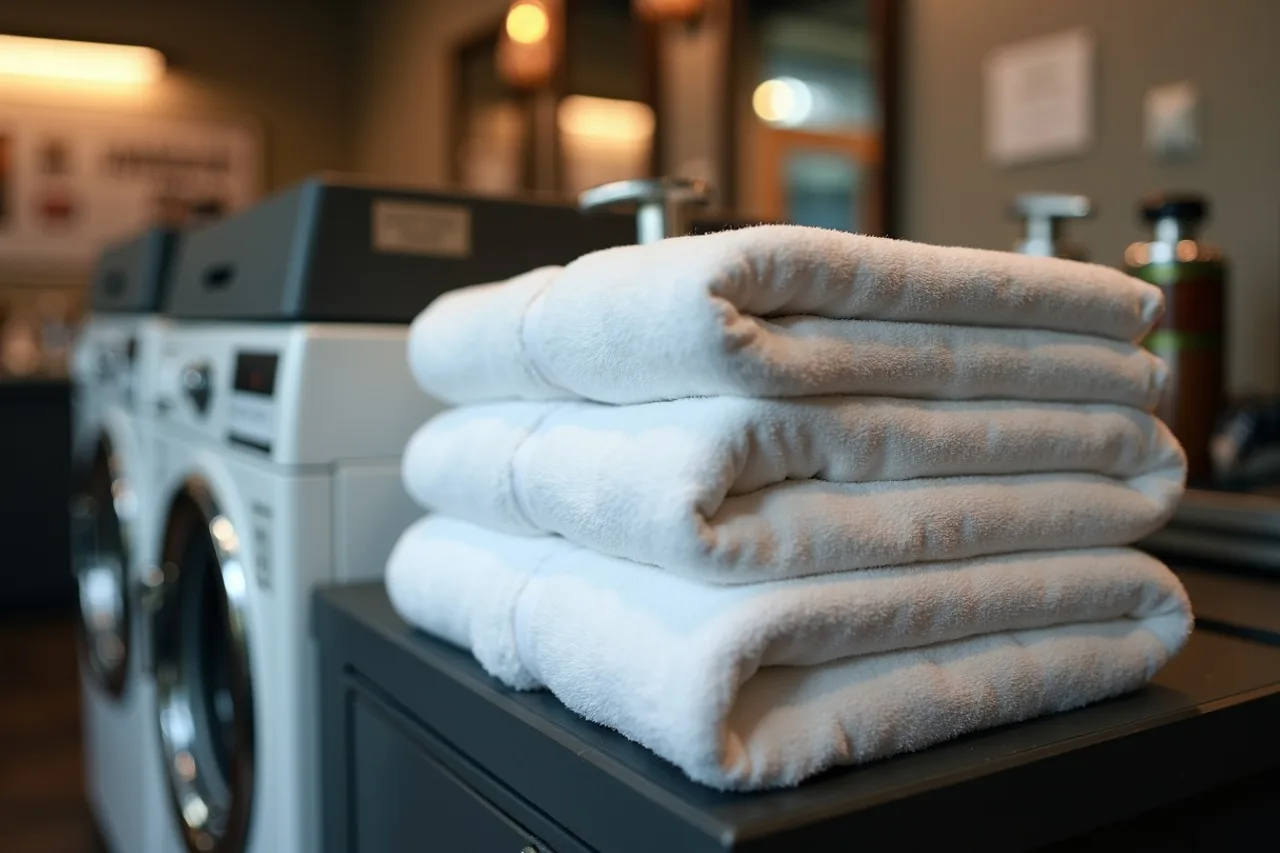
A client gets up after a shave, the barber reaches for a towel from the shelf – the same one they wiped the previous client with a moment ago, because "it's only…
A client gets up after a shave, the barber reaches for a towel from the shelf – the same one they wiped the previous client with a moment ago, because "it's only slightly damp". In that single gesture lies the whole story of where salons lose an inspection. Towels and linen in a barbershop are not a trivial matter. This is material that has contact with skin, sweat, cosmetic residue and sometimes blood – and the inspector knows exactly where to look. This article shows how to organise laundering and storage so that one towel does not become a tool for repeated infection.
Rule number one: one towel = one client
This is the simplest and most important rule. Every client gets a clean towel. After use, the towel goes into the dirty-linen bin – not on a hook, not "to finish drying", not on the counter. The Regulation of the Minister of Health of 17 February 2004 on sanitary requirements for hairdressing establishments requires linen (towels, capes, underlays) to be clean and changed after every client, and stored in conditions that protect it from contamination.
"Damp but supposedly clean" does not exist in this logic. Moisture is an environment for bacteria and fungi. A towel used once is dirty – full stop.
Separating clean from dirty
This is the second thing the inspector checks straight away: whether clean linen does not mix with dirty linen. You need two separate circuits:
- Clean linen – a closed cabinet or a shelf with doors, away from the barber stations and dust
- Dirty linen – a lidded bin or bag, emptied regularly, never in sight of the client
It cannot be the case that clean towels lie uncovered on a counter onto which hair clippings will soon fall. That is a non-compliance you can see in five seconds.
Laundering – temperature and frequency matter
Effective laundering of salon linen is a minimum of 60°C, and for towels after shaving or services with possible contact with blood – ideally 90°C or with a laundry disinfectant added. Low temperatures do not kill microorganisms, they just spread them around the fabric.
| Type of linen | Wash temperature | When to wash |
|---|---|---|
| Ordinary towels | min. 60°C | after every client – in bulk at the end of the day |
| Towels after shaving / with contact with blood | 90°C or 60°C + disinfectant | a separate load, as soon as possible |
| Cloth capes | min. 40–60°C | when soiled, at least once a day |
Wash in the salon or send it to a laundry?
Both options are acceptable. The important thing is that the process is controlled:
- A washing machine in the salon: cheap and quick, but you have to keep an eye on the temperature and have a separate place to dry clean linen, away from the stations
- An external laundry: convenient at high turnover, but keep a document confirming the service (a contract or invoices) – the inspector may ask for it
What not to do: wash the towels at home in a private machine together with the family's clothes. That is an uncontrolled process – you have no proof of temperature or separation. In the event of an inspection, that is a weak spot.
The alternative: single-use linen
More and more barbershops are switching to single-use paper towels and underlays. Advantages: no laundering, no separation problem, full hygiene. Disadvantages: ongoing cost and waste. Many owners combine both systems – single-use neck strips and underlays, cloth towels for hair washing. That is a sensible compromise. We write about surfaces and neck strips themselves in the article disinfecting the chair and surfaces – the procedure.
Drying and storing clean towels
Even a well-laundered towel can be spoiled by poor storage. The rules:
- dry it in a clean, airy place – never by the station, where dust and hair settle
- store it in a closed cabinet, folded, not in contact with the floor
- do not "finish drying" a towel that has already been in contact with a client
How to document it
The system alone is not everything – the inspector likes to see a record. You need a procedure for handling linen (separation, temperature, frequency) and – if you use an external laundry – a contract or invoices. It is also worth keeping a simple record that linen is laundered in line with the procedure. We show how to slot it into the salon's overall documentation in the article barbershop sanitary documentation – the full set for an inspection.
A real scenario that costs you a non-compliance
Saturday, the salon is packed. The clean towels are running out because the machine "is still going". The barber reaches for a towel hanging on the back of the neighbouring chair – "it was only used once, to dry hands". They let a client with irritated skin come into contact with exactly what the previous one touched. If an inspector happens to walk in and sees towels hanging on hooks instead of in the dirty-linen bin – that is a non-compliance in five seconds, without any need to look at the documents.
The conclusion is simple: you have to have a stock. The number of clean towels should be enough for the busiest day plus a margin. A towel costs a few złoty. A lack of stock costs a non-compliance and your reputation.
The most common mistakes with linen
A list of things salons lose this topic on:
- "Damp but clean" – there is no such category; a towel used once is dirty
- Clean linen on the counter – uncovered, within reach of falling hair clippings
- Dirty towels on a hook – instead of in a lidded bin, in the client's view
- Washing at a low temperature – 30°C only spreads microorganisms, it does not remove them
- No document from the external laundry – you use a laundry but have no contract or invoices
Each of these points can be fixed in a single day. A lidded bin, a closed cabinet and a clear temperature rule – and the linen topic stops being a weak spot.
Frequently asked questions
At what temperature should I wash towels in a barbershop?
A minimum of 60°C for ordinary towels. For towels after shaving or with possible contact with blood, ideally 90°C or 60°C with a laundry disinfectant added. Lower temperatures do not ensure effective removal of microorganisms.
Can I wash salon towels at home?
That is a weak solution. Home washing together with private clothes is an uncontrolled process – you have no proof of temperature or of linen separation. A separate washing machine in the salon or an external laundry with a document confirming the service is better.
Is a single-use towel better than a cloth one?
In terms of hygiene it is simpler, because it eliminates the problem of laundering and separation. It is, however, more expensive in ongoing use and generates waste. Many salons combine both systems: single-use neck strips and underlays plus cloth towels laundered at high temperature.
How should clean linen be stored to comply with the requirements?
Clean linen must be separated from dirty linen and stored in a closed cabinet or a shelf with doors, away from the barber stations, dust and the floor. Dirty linen goes into a lidded bin emptied regularly.
Towels and linen are a simple topic – until an inspector asks about it. BarberReady gives you a ready-made procedure for handling linen, instructions for laundering and storage, and records that confirm you are doing it in line with the sanitary requirements for hairdressing establishments. No reinventing from scratch.