The Most Common Barbershop Sanitary Mistakes
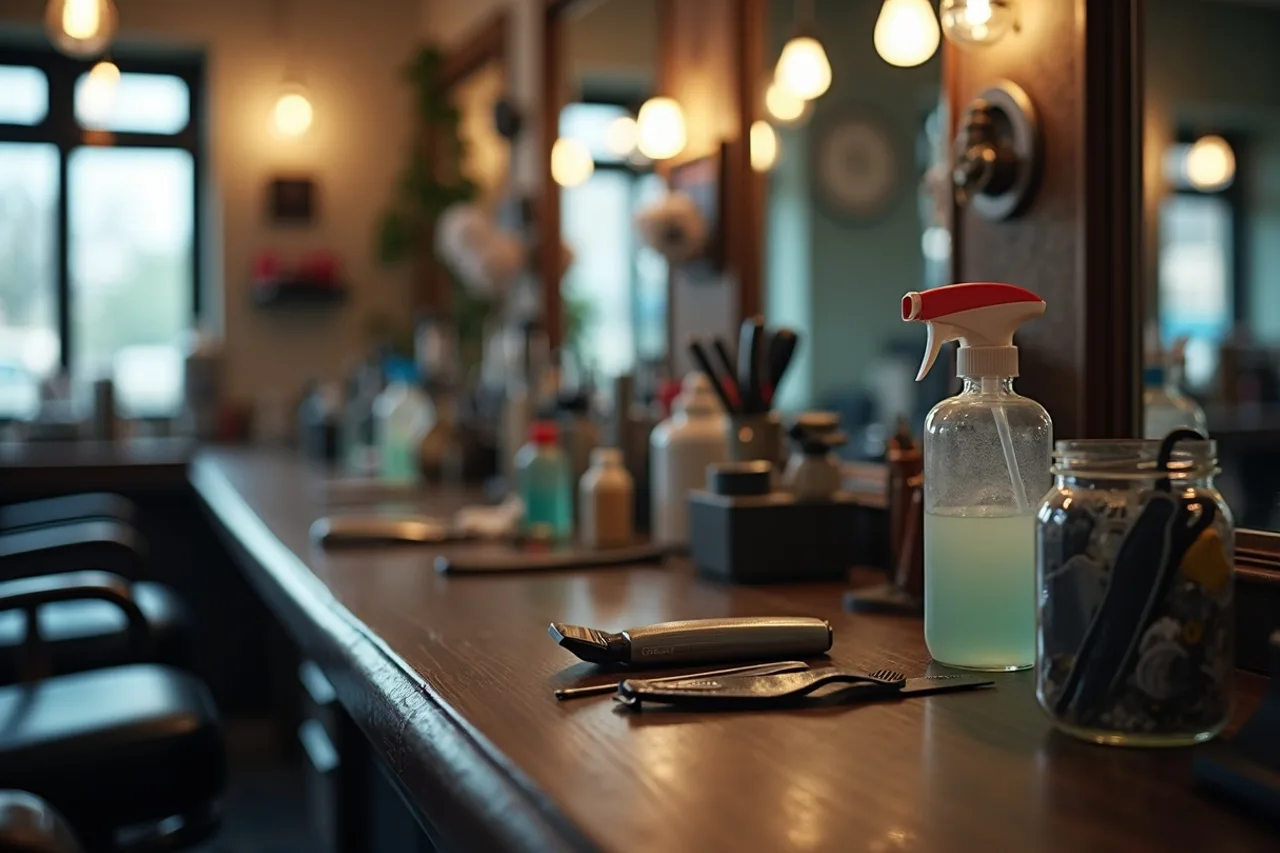
A Sanepid (sanitary inspectorate) inspector walks in on Wednesday at 10:00. He isn't looking for theatre — he's looking for compliance.
A Sanepid (sanitary inspectorate) inspector walks in on Wednesday at 10:00. He isn't looking for theatre — he's looking for compliance. He opens the cupboard under the basin, looks at the clippers between clients, asks a barber about disinfection and glances at the sterilisation register. In 15 minutes he knows more about your premises than many a regular client. And he usually runs into the same mistakes — because most barbershops make exactly the same ones.
Below is a list of the most common sanitary slip-ups that cost nerves, and sometimes a fine. Check how many of them apply to you.
Mistake 1: Confusing disinfection with sterilisation
"I wiped it with alcohol, it's clean." Not always. Disinfection reduces micro-organisms; sterilisation destroys them all — including spores. Tools that come into contact with blood require sterilisation in an autoclave, not a wipe. This is the most common substantive mistake in the trade.
Mistake 2: Blades and single-use items "for the next client"
A shaving blade, a paper neck strip, a cape — these are single-use items. Using them on the next client isn't a saving, it's a risk of transmitting an infection. The inspector checks this as one of the first things.
Mistake 3: No sterilisation register
You have an autoclave, but you don't keep a register? That's as if you had no proof that you use it. Sanepid asks: "When did you last sterilise? Where's the effectiveness monitoring?". Without a record, the answer "well, of course we do it" is worthless.
| What should be in the register | Why |
|---|---|
| Date and cycle number | Proof of regularity |
| Result of the check (indicator) | Proof of effectiveness |
| Person responsible | It's clear who performed it |
Mistake 4: The team doesn't know the procedures
You have excellent documentation in a binder, but the barber at the chair can't answer a question about disinfection. The inspector asks people, not paper. If everyone says something different, you don't have a system — you have a PDF. That is why training the team isn't a formality; more in sanitary training for the team.
Mistake 5: The dirty zone and the clean zone mix together
Used tools lie next to sterilised ones. Dirty towels next to clean ones. Without separating the "clean/dirty" zones, recontamination occurs — that is, soiling what is already clean. A simple split with containers solves 80% of the problem.
Mistake 6: Hand hygiene "from memory"
Washing and disinfecting the hands must have specific moments, not "often":
- After every client.
- After a cut (your own or the client's).
- After touching the phone, the till, the door handle.
- Before starting work with a new client.
Mistake 7: No procedure for a cut to a client
A razor cut happens. The question is: do you have a procedure and a first-aid kit at hand, or do you improvise? No incident record and no instructions is a signal to the inspector that safety is a matter of chance.
Mistake 8: Disinfectants without safety data sheets
You use solutions and sprays, but you don't have their safety data sheets and you don't know the concentrations and contact times? "More doesn't mean better", and "any old way" doesn't work. Safety data sheets are a standard element of documentation that an inspection asks about.
Mistake 9: Chaos with several barbers and chair rental
With booth rental every independent barber "does it their own way". One impeccably, another cutting corners — and Sanepid assesses the whole premises. Without a shared standard, one careless tenant ruins everyone's result. How to sort this out, we write in booth rental — chair rental and liability.
Mistake 10: The documentation describes a different process than the real one
The procedure says "sterilisation every cycle", but in practice the autoclave stands switched off. This is the worst variant: the paper clashes with reality. The inspector compares what you have written down with what actually happens at the chair. Documentation is meant to describe your real process, not your wishes.
Mistake 11: Products past their date and without concentration checks
A disinfectant solution has an expiry date and a recommended concentration. Past its date it may lose effectiveness, and diluted "by eye" it doesn't work as it should. Too little product means no effect, too much means an unnecessary chemical hazard. Stick to the safety data sheets and keep an eye on the dates.
Mistake 12: Working despite illness or an open wound
A barber with an open, uncovered wound on their hand should not work against a client's skin. It's a risk both ways. The solution is simple: a covered wound and gloves, or — with a more serious cut — stepping away from the station. This is an element of staff hygiene that an inspector doesn't let slide.
How to sort this out once and properly
Instead of firefighting at every inspection, set up a system that works by itself:
- Write the procedures for your real process — don't copy someone else's, which describe something you don't do.
- Introduce registers you can actually keep — simple, short, at the station.
- Train the team and check that they know it — a document without people's knowledge is worthless.
- Do a quick review every quarter — whether the paper still describes reality.
Mini-test: how many mistakes do you have?
- Do you distinguish disinfection from sterilisation in practice?
- Do you keep a sterilisation register?
- Can every barber describe the disinfection procedure?
- Do you have separated clean/dirty zones?
- Do you have a procedure and a first-aid kit in case of a cut?
Three "nos" is a signal that you have paper, not a system.
Where these mistakes come from
Rarely from laziness. Usually from three reasons, easy to fix once you name them:
- No written standard — everyone does it "as best they can", because no one has established how it's done here.
- Knowledge only in people's heads — when an experienced barber leaves, the procedure leaves with them.
- Paper detached from practice — documentation copied from somewhere, describing a process the premises doesn't perform.
The fix isn't buying a thicker binder. It's making the procedure describe your real process, making it possible to keep, and making sure the team knows it. Those are the three conditions that turn paper into a system.
Where to start this week
You don't have to fix everything at once. Start with the highest-impact things:
- Physically separate the clean and dirty zones — it's a matter of two containers.
- Set up a sterilisation register and start filling it in from today.
- Ask the team three questions about disinfection and align the answers.
Three moves in a week close most of the typical objections an inspector picks up in the first 15 minutes.
Frequently asked questions
What is the most common sanitary mistake in barbershops?
Confusing disinfection with sterilisation, and having no sterilisation register. Many premises disinfect tools but don't sterilise the ones that come into contact with blood, and can't prove that they do it regularly.
Can Sanepid close a barbershop over sanitary mistakes?
In the event of a serious threat to health, the inspectorate can order the irregularities to be remedied, impose a fine, and in extreme situations restrict the activity until they are remedied. Usually, though, there are recommendations and a deadline for improvement first.
Is an autoclave alone enough to pass an inspection?
No. An autoclave is a tool, but what counts is proof that you use it: a cycle register, effectiveness monitoring and the team's knowledge of the procedure. Equipment without documentation and habits is not enough.
How can I reduce the risk during an inspection fastest?
Sort out three things: separate the clean and dirty zones, start keeping a sterilisation register, and train the team so that everyone can describe the procedure. That closes most of the inspector's typical objections.
Want to eliminate these mistakes before the inspector does it for you? BarberReady gives you a ready-made system: disinfection and sterilisation procedures, registers, zone separation, instructions on handling a cut, and training materials for the team. Not a guide on how to game an inspection — a guide on how not to trip up on the obvious things.