Barber Onboarding: A 7-Day Hygiene Plan That Works
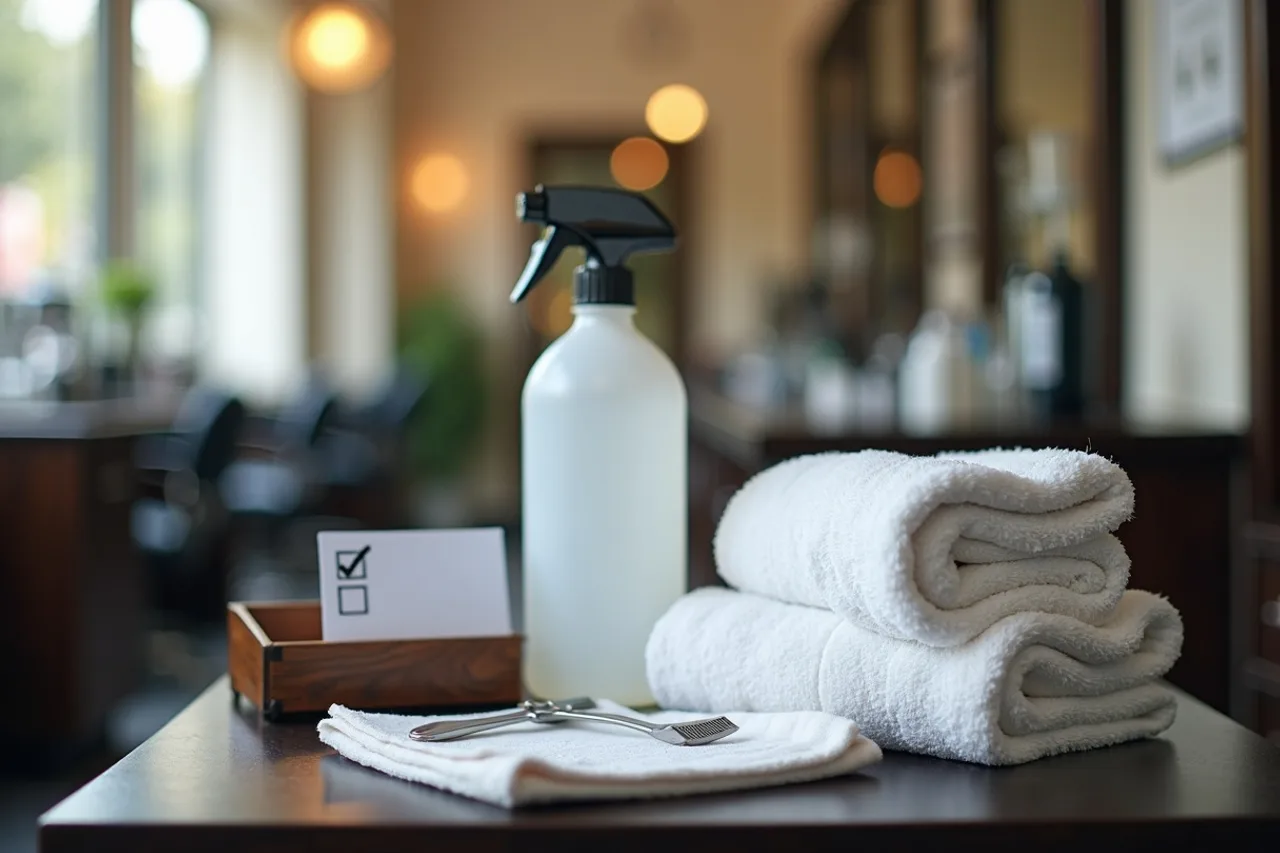
A new barber turns up on Monday. "Watch Kamil and do what he does." The problem: Kamil has his own habits, half of which skip the procedure.
A new barber turns up on Monday. "Watch Kamil and do what he does." The problem: Kamil has his own habits, half of which skip the procedure. After a week the new hire disinfects the clippers "from memory", doesn't know where the first-aid kit is, and when the inspector asks about sterilisation he just shrugs. An onboarding done by accident = a risk written straight into the rota.
Good barber onboarding is short, repeatable and measurable. Below is a 7-day plan you can sustain even with staff turnover.
The goal of onboarding in one sentence
After a week, the new barber:
- knows the rules of hygiene and disinfection between clients,
- can sterilise and prepare the tools,
- knows what to do if a client is cut,
- understands where the procedures are and how to fill in the registers.
This is not "nice to have". It is the minimum for you to leave the premises with peace of mind while the new hire works a shift without you.
What NOT to do
- "Watch someone and do what they do" — the new hire learns someone else's mistakes, not the premises' standards.
- Throwing them in at the deep end on day one — the new hire at the chair during the rush, with no knowledge of the rules. Stress and mistakes guaranteed.
- A one-off chat plus a "trained" signature — the next day they remember nothing, but the sheet is there. That's theatre.
- No verification — the new hire "somehow manages" until an incident happens.
A 7-day plan that works in the real world
Day 1: Hygiene and the critical rules
- A walk-through of the premises: clean zone, dirty zone, the tool-disinfection point.
- Hand hygiene — the specific moments: after every client, after a cut, after touching the phone.
- Where the procedures, the first-aid kit and the registers are.
Day 2: Tools and disinfection
- Which tools are single-use (blades, neck strips) and which are reusable.
- Product, concentration and contact time for disinfecting clippers and combs.
- 15 minutes of practice under the supervisor's eye.
Day 3: Sterilisation
- Operating the autoclave (if there is one) or the procedure for reusable tools.
- Which tools require sterilisation (contact with blood).
- Effectiveness monitoring and documenting the cycle.
Day 4: Cutting a client and first aid
- Step-by-step procedure: stopping the bleeding, dressing the wound, disinfecting the station.
- The contents of the first-aid kit and where it stands.
- How to record the incident.
Day 5: The rush under control
- Working fast, but without cutting corners on disinfection procedures.
- Keeping the station clean between clients at pace.
Day 6: An independent shift + observation
- The new hire works, the supervisor observes a full shift.
- You note down 3 corrections — not 15.
Day 7: A practical test
- 5 questions: "How do you disinfect the clippers between clients?", "What do you do if a client is cut?", "Which tools are single-use?", "Where is the first-aid kit?", "How do you sterilise tools after contact with blood?"
- 3 practical tasks: prepare the station, disinfect the tools, demonstrate operating the autoclave.
The onboarding card — proof for the inspector
The inspector may ask: "How do you onboard new people?". "Verbally" is a weak answer. An onboarding card is a strong one.
| Element of the card | What it's for |
|---|---|
| First name, surname, start date | Identifying the employee |
| Day 1–7 checkboxes | Proof the plan was carried out |
| Supervisor's and manager's signatures | Confirmation of supervision |
| Result of the Day 7 test | Verification, not just attendance |
| Date allowed to start work | Formal completion of onboarding |
What if they fail the test after Day 7
That is not the end — it is feedback. Identify the specific gaps, add 2–3 days to fill them, and repeat the test only on the missing scope. The key: the decision to allow independent work is made BEFORE, not "maybe they'll pick it up over a month".
The role of the buddy (mentor) — why it isn't "an observer on the sidelines"
A new barber learns mainly from the person onboarding them. If the buddy is someone who cuts corners themselves, the new hire will take on those shortcuts. That is why you choose the buddy deliberately:
- Keeps the standards — disinfects impeccably, keeps the registers, doesn't improvise.
- Can correct on the spot — fixes a mistake the moment it happens, not "along the way" after the shift.
- Has patience — onboarding is not an exam, it's learning. The new hire has the right to ask.
The buddy signs the onboarding card — taking shared responsibility for the new hire knowing the rules. This has a mobilising effect on both sides.
The registers the new hire must be able to keep
Onboarding isn't only cutting and disinfecting. It is also the paperwork the new hire will fill in on their own:
- Sterilisation register — when and what went into the autoclave, and the result of the check.
- Cleaning / disinfection register for the premises — ticked off AFTER the task is done, not in advance for the whole shift.
- Incident log — where and how to record a cut to a client.
The new hire ticks off only after actually performing the task. "Ticking off in advance" is falsifying the register — and one of the things an inspector spots fastest.
Onboarding a non-Polish-speaking employee
More and more people from Ukraine and other countries work in barbershops. The language barrier is a challenge, not an excuse: PL/EN instructions, pictograms at the disinfection station, a buddy who speaks the new hire's language, showing rather than telling. More in our post on PL/EN instructions for a multilingual team and in the guide on a barber from Ukraine and the documents.
Onboarding vs experience — why even an "old hand" needs it
A common mistake: "He's been cutting for 10 years, why onboard him?". Experience with cutting is not the same as knowing your procedures. Every salon disinfects a little differently, has different equipment, different registers and different zone rules. An experienced barber has to learn your system — otherwise they will bring in their own habits, including those that break your procedures.
You can shorten the "how to cut" part of onboarding for an experienced barber, but not the "how we do it safely here" part. Disinfection, sterilisation, handling a cut and the registers — you always go through these, regardless of seniority.
After a week: review and decision
Day seven is not the end, but a checkpoint. Do a quick review:
- Does the new hire know the critical procedures without looking at a sheet?
- Do they keep the registers on their own and at the right moments?
- During the rush, do they maintain hygiene or start cutting corners?
If yes — you allow independent work and record the date on the card. If not — you add 2–3 days for the specific gaps. This decision is made deliberately, on the basis of the test, not "a hunch that they somehow manage".
Frequently asked questions
Is 7 days enough to onboard an experienced barber?
Yes, if we're talking about the rules of hygiene and disinfection and your premises' procedures — not about learning to cut hair. An experienced barber knows how to cut; onboarding teaches them how to do it safely and in line with your system.
Who should be the new employee's buddy?
Someone who keeps the standards themselves — not the first available barber. A bad buddy passes on bad habits. It's good if, for a non-Polish-speaking employee, the buddy speaks their language.
Is an onboarding card required by Sanepid?
There is no single template imposed by a regulation, but onboarding and training documentation is proof that you have a system. During an inspection it works in your favour — it shows that new employees know the procedures before they touch a client.
What if the new hire fails the practical test?
You go back to the specific gaps, give 2–3 days of practice and repeat the test on that scope. You do not allow independent work until they have mastered the critical procedures — especially disinfection and handling a cut.
Want to onboard new barbers in a week, without chaos or leaving it to chance? BarberReady gives you a ready-made process: a 7-day checklist, an onboarding card with signatures, disinfection and sterilisation procedures, instructions on handling a cut, and PL/EN materials. A system you can sustain through staff turnover.