First Aid in a Barbershop: The First-Aid Kit
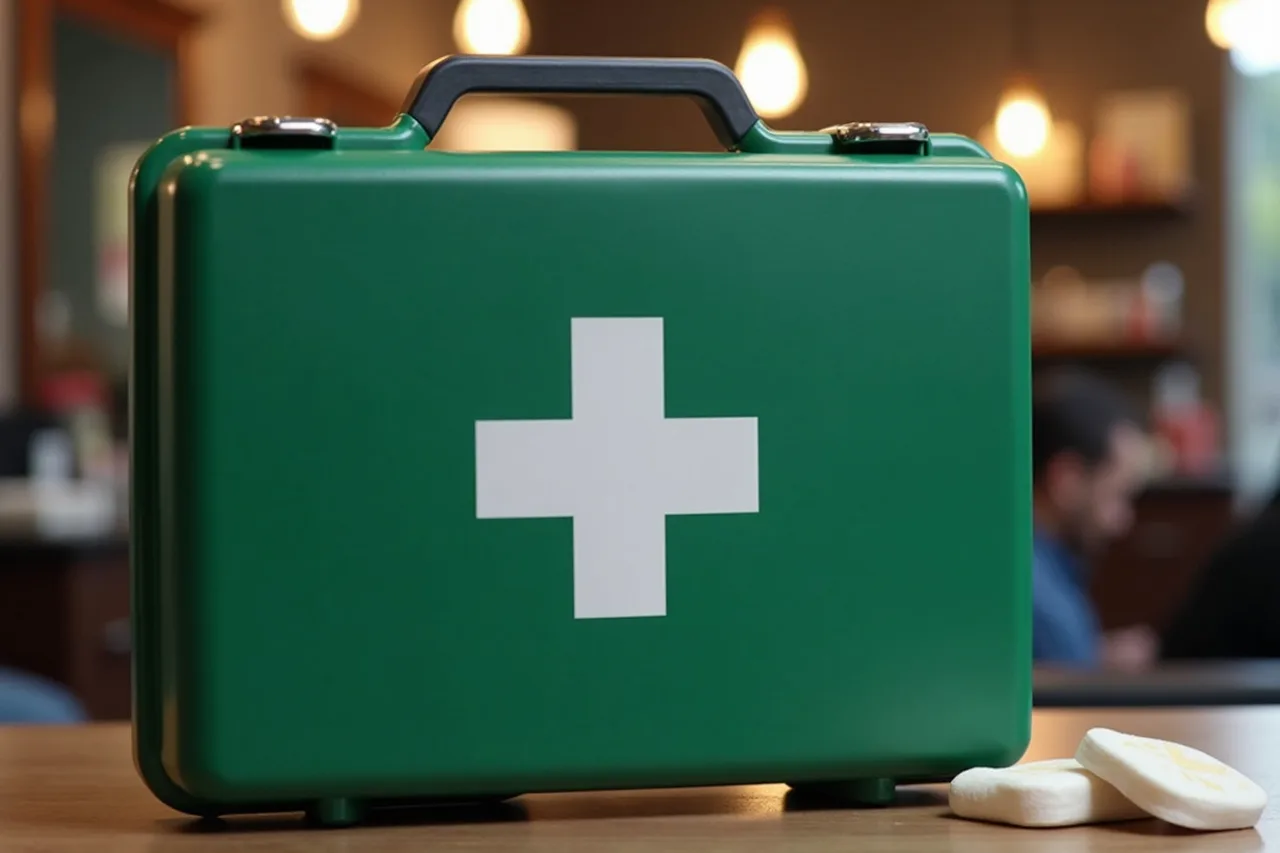
Friday afternoon, a queue of clients, a barber working fast on a beard with a razor - and one careless stroke. Blood.
Friday afternoon, a queue of clients, a barber working fast on a beard with a razor - and one careless stroke. Blood. The client turns pale, the barber looks for something to dress it, and the first-aid kit... well, where is it? In a barbershop, cuts are not a matter of "if" but "when". First aid in a barbershop is not last-minute panic, but a prepared first-aid kit and a clear procedure. This article explains what you must have and how to react.
Why first aid is a serious topic
A barber works with sharp tools right against the skin - the face, the neck, the ears. Even an experienced one occasionally gives a client a small cut. Add to that their own cuts and contact with blood. That is why the ability to react quickly and hygienically is part of the job, not an add-on.
The obligation to provide first aid follows from the Labour Code - the employer must provide the means for giving first aid and designate people to give it. Even a one-person barbershop should have a first-aid kit - for its own safety and the clients'.
There is also the other side of the coin: image. A client who sees the barber react to a cut calmly and professionally - putting on gloves, reaching for the first-aid kit, dressing the wound - will leave convinced they are in good hands. A barber who flails around in such a situation, hunting for a plaster in a drawer, loses trust, even if the cut itself was minor. Preparation is not just an obligation, but also an element of professionalism.
What should be in a barbershop first-aid kit
A first-aid kit in a service establishment must be matched to the type of hazards. In a barbershop, cuts and contact with blood dominate, so the basis is dressings and protective supplies.
| Category | Example contents |
|---|---|
| Dressings | Plasters, sterile dressings, bandages, gauze, triangular bandage |
| Disinfection | An agent for disinfecting skin and wounds |
| Protection | Disposable gloves, a CPR face shield |
| Tools | Scissors, safety pins, emergency blanket |
| Bleeding control | Pressure dressing, haemostatic stick (popular in barbershops) |
| Instructions | First-aid instructions with emergency numbers |
A haemostatic stick or powder is equipment that works well in a barbershop for minor cuts from a razor - it helps stop bleeding quickly. Place the first-aid kit in a visible, easily accessible spot and label it, so that everyone in the premises knows where to look for it when needed.
The kit also needs checks. Materials have expiry dates, dressings get used up, the disinfectant runs out. Every so often, check the contents and top up what is missing - the worst moment to discover the plasters have run out is the moment you have just cut a client. A simple rule: after each use, replace what you used up.
Procedure for a client's cut
When you cut a client, calm and hygiene are what count. Step by step:
- Put on disposable gloves (protection against contact with blood)
- Reassure the client and assess the cut
- Stop the bleeding - pressure with a sterile dressing or a haemostatic stick for a minor cut
- Disinfect the wound with a skin-disinfecting agent
- Apply a dressing
- For a deeper or non-healing cut - advise a visit to a doctor
Afterwards, disinfect the station and the tool that came into contact with blood, or take it out of use for sterilisation. We write about disinfection procedures in the piece on a barber's personal protective equipment.
Contact with blood - what to remember
Blood is a potential source of infection, including blood-borne diseases. That is why, with every contact with blood - your own or the client's - there are non-negotiable rules that should not be taken lightly even for a seemingly minor cut:
- Always disposable gloves
- A tool after contact with blood requires disinfection and sterilisation
- Materials soiled with blood (cotton, gauze) are treated as waste requiring proper disposal
- Blades and cutting edges are sharps waste - into a closed, labelled container
Handling sharps waste is a point Sanepid (the Polish sanitary inspectorate) pays attention to. We write about inspections in the article on notifying Sanepid when opening a barbershop.
It is worth remembering a simple rule: with contact with blood, do not improvise. You always put on gloves, even if the cut looks microscopic. You cannot judge the risk of blood "by eye" - you do not know whether the client is a carrier of something infectious, and they may not even know it themselves. This caution protects you above all, because it is you who has the most frequent contact with the blood of different people.
First-aid training
Knowing how to react is just as important as the first-aid kit. If you employ staff, designate the people responsible for first aid and make sure they know:
- Where the first-aid kit is and what is in it
- How to stop bleeding
- When to call for help (numbers 112, 999)
- How to act if a client faints (e.g. a reaction to the sight of blood)
Basic first-aid training is a small cost that can make a difference in a stressful situation. It is worth including in the onboarding of a new barber.
A good practice is also a simple instruction stuck inside the first-aid kit or nearby: emergency numbers, the order of actions for bleeding, the premises address (useful when calling for help). Under stress, even an experienced person can forget the obvious, and a card at hand keeps the response organised. These are seconds that matter in a more serious situation.
Fainting and other situations
Not every situation is a cut. A client may faint - from heat, from the sight of blood, from low blood pressure. The basic response:
- Sit or lay the person down in a safe place
- Ensure fresh air
- Check responsiveness and breathing
- If there is no improvement or the person loses consciousness - call 112
Fainting at the sight of blood happens more often than you might think - especially after a cut during a razor shave. A client who is usually composed may suddenly turn pale and slide off the chair. That is why a barber chair with a reclining function is not just a comfort but also a safety element - it lets you quickly lay a person down with their legs raised, which usually restores consciousness in a short time.
Frequently asked questions
Does a barbershop have to have a first-aid kit?
Yes. The employer is obliged to provide the means for giving first aid. Even a one-person barbershop should have a first-aid kit given the nature of work with sharp tools.
What is most important in a barbershop first-aid kit?
Dressings, a wound-disinfecting agent, disposable gloves and a bleeding-control agent, for example a haemostatic stick. This equipment addresses the most common hazard, namely cuts.
What to do after cutting a client with a razor?
Put on gloves, stop the bleeding, disinfect the wound and apply a dressing. The tool that came into contact with blood should be taken out of use for disinfection and sterilisation, and the station cleaned.
Do you need first-aid training?
If you employ workers, you should designate people to give first aid and ensure they have the appropriate knowledge. Basic training is strongly recommended in this sector.
Want your barbershop's safety procedures sorted?
BarberReady gives you ready-made procedures for hygiene, first aid and handling blood and sharps waste - tailored to a barbershop. Instead of improvising in a stressful situation, you have a clear plan.